KEYTRUDA® (pembrolizumab) is a Prescription Medicine and is available as a 100 mg/4 mL concentrate for solution for infusion and KEYTRUDA SC® (pembrolizumab) is a Prescription Medicine and is available as 395 mg/2.4 mL and 790 mg/4.8 mL solutions for subcutaneous injection. Please review the KEYTRUDA and KEYTRUDA SC Data Sheet before prescribing. The Data Sheet is available at www.medsafe.govt.nz.
SELECTED SAFETY INFORMATION
INDICATIONS:
Intravenous Pembrolizumab: As monotherapy for the treatment of unresectable or metastatic melanoma in adults. As monotherapy for the adjuvant treatment of adult and paediatric (12 years and older) patients with Stage IIB, IIC, or III melanoma who have undergone complete resection. In combination with pemetrexed and platinum chemotherapy for first-line treatment of metastatic non-squamous non-small cell lung carcinoma (NSCLC), with no EGFR or ALK genomic tumour aberrations. In combination with carboplatin and either paclitaxel or nab-paclitaxel for first-line treatment of metastatic squamous NSCLC. As monotherapy for first-line treatment of patients with NSCLC whose tumours express PD-L1 [tumour proportion score (TPS) ≥1%] as determined by a validated test, with no EGFR or ALK genomic tumour aberrations and are either; metastatic, or stage III where patients are not candidates for surgical resection or definitive chemoradiation. As monotherapy for the treatment of patients with advanced NSCLC with a PD-L1 TPS level ≥1% as determined by a validated test and who have received platinum-containing chemotherapy. Patients with EGFR or ALK genomic tumour aberrations should have received prior therapy for these aberrations prior to receiving KEYTRUDA. In combination with platinum-containing chemotherapy for the treatment of patients with resectable Stage II, IIIA, or IIIB(T3-4N2) NSCLC as neoadjuvant treatment, and then continued as monotherapy as adjuvant treatment. As monotherapy for the adjuvant treatment of patients with Stage IB (T2a ≥4 cm), II, or IIIA NSCLC who have undergone complete resection. In combination with pemetrexed and platinum chemotherapy for the first-line treatment of adult and paediatric (12 years and older) patients with unresectable advanced or metastatic malignant pleural mesothelioma (MPM). As monotherapy for the treatment of adult and paediatric patients with relapsed or refractory classical Hodgkin Lymphoma (cHL). As monotherapy for patients with locally advanced or metastatic urothelial carcinoma who are not eligible for cisplatin-containing chemotherapy and whose tumours express PD-L1 [Combined Positive Score (CPS) ≥10] as determined by a validated test, or in patients who are not eligible for any platinum-containing chemotherapy regardless of PD-L1 status, or who have received platinum-containing chemotherapy. As monotherapy for patients with Bacillus Calmette-Guerin (BCG)-unresponsive, high-risk, non-muscle invasive bladder cancer (NMIBC) with carcinoma in-situ (CIS) with or without papillary tumours who are ineligible for or have elected not to undergo cystectomy. As monotherapy for the treatment of patients with resectable locally advanced head and neck squamous cell carcinoma (HNSCC) whose tumours express PD-L1 with a CPS≥1, as determined by a validated test, as neoadjuvant treatment, continued as adjuvant treatment in combination with radiotherapy (RT) with or without cisplatin and then as monotherapy. In combination with platinum and 5-FU chemotherapy for first-line treatment of patients with metastatic or unresectable recurrent HNSCC. As monotherapy for first-line treatment of patients with metastatic or unresectable recurrent HNSCC whose tumours express PD-L1 (CPS ≥1) as determined by a validated test. As monotherapy for metastatic or unresectable recurrent HNSCC with disease progression on or after platinum-containing chemotherapy. As monotherapy in adults and paediatric patients for the treatment of unresectable or metastatic microsatellite instability-high (MSI-H) or mismatch repair deficient (dMMR) colorectal cancer (CRC) that has progressed following treatment with a fluoropyrimidine, oxaliplatin, and irinotecan (this indication was approved based on objective response rate and response duration in a single-arm trial). As monotherapy in adults and paediatric patients for the treatment of unresectable or metastatic MSI-H or dMMR non-colorectal tumours that have progressed following prior treatment and with no satisfactory alternatives (sample sizes for individual tissue types were too small to provide data on clinical utility of the MSI-H/dMMR tests for each of the tissue types, individually. The assumption that MSI-H/dMMR-status is predictive of the treatment effect of KEYTRUDA for every tissue type has not been verified. The safety and effectiveness of KEYTRUDA in paediatric patients with MSI-H central nervous system cancers have not been established). As monotherapy for first-line treatment of patients with unresectable or metastatic MSI-H or dMMR CRC. In combination with gemcitabine and cisplatin for the treatment of patients with locally advanced unresectable or metastatic biliary tract carcinoma (BTC). In combination with carboplatin and paclitaxel, followed by KEYTRUDA as a single agent, for the treatment of adult patients with primary advanced or recurrent endometrial carcinoma. In combination with lenvatinib for the treatment of patients with advanced endometrial carcinoma who have disease progression following prior systemic therapy in any setting and are not candidates for curative surgery or radiation. In combination with chemoradiotherapy (CRT), for the treatment of patients with high-risk, locally advanced cervical cancer (FIGO 2014 Stage IB2-IIB and node-positive, or Stage III-IVA). In combination with platinum chemotherapy and paclitaxel, with or without bevacizumab, for the treatment of patients with persistent, recurrent, or metastatic cervical cancer whose tumours express PD-L1 (CPS ≥1) as determined by a validated test. As monotherapy for the treatment of patients with recurrent or metastatic cutaneous squamous cell carcinoma (cSCC) or locally advanced cSCC that is not curable by surgery or radiation. As monotherapy for adult and paediatric patients with recurrent locally advanced or metastatic Merkel cell carcinoma (MCC). In combination with axitinib for first-line treatment of advanced renal cell carcinoma (RCC). In combination with lenvatinib for first-line treatment of advanced RCC. As monotherapy for the adjuvant treatment of patients with RCC at intermediate-high or high risk of recurrence following nephrectomy, or following nephrectomy and resection of metastatic lesions. In combination with fluoropyrimidine- and platinum-containing chemotherapy for the first-line treatment of patients with locally advanced unresectable or metastatic HER2-negative gastric or gastroesophageal junction (GEJ) adenocarcinoma. In combination with trastuzumab, fluoropyrimidine- and platinum-containing chemotherapy for the first-line treatment of patients with locally advanced unresectable or metastatic HER2-positive gastric or GEJ adenocarcinoma, whose tumours express PD-L1 (CPS ≥1) as determined by a validated test. In combination with platinum and fluoropyrimidine based chemotherapy for first-line treatment of patients with locally advanced unresectable or metastatic carcinoma of the oesophagus or GEJ. In combination with chemotherapy for the treatment of patients with high-risk early-stage triple-negative breast cancer (TNBC) as neoadjuvant treatment, and then continued as monotherapy as adjuvant treatment after surgery. In combination with chemotherapy for the treatment of patients with locally recurrent unresectable or metastatic TNBC whose tumours express PD-L1 (CPS ≥10) as determined by a validated test.
Subcutaneous Pembrolizumab: The indications listed above for intravenous pembrolizumab are also applicable to subcutaneous pembrolizumab with the following additional restrictions: a) Unless specified otherwise in the indication, KEYTRUDA SC can only be used in adult patients and b) For indications that specify paediatric use, patients treated with KEYTRUDA SC must be ≥12 years old.
CONTRAINDICATIONS:
Hypersensitivity to the active substance or to any of the excipients listed in Section 6.1 of the KEYTRUDA or KEYTRUDA SC Data Sheets.
PRECAUTIONS:
Immune-mediated adverse reactions, including severe and fatal cases, have occurred in patients receiving pembrolizumab. In clinical trials, most immune-mediated adverse reactions occurred during treatment, were reversible and managed with interruptions of pembrolizumab, administration of corticosteroids and/or supportive care. Immune-related adverse reactions have also occurred after the last dose of pembrolizumab. Immune-mediated adverse reactions affecting more than one body system can occur simultaneously. See Data Sheets. Immune-mediated adverse reactions in patients receiving pembrolizumab have occurred as follows: pneumonitis (including fatal cases), colitis, hepatitis, nephritis, adrenal insufficiency, hypophysitis, type 1 diabetes mellitus, hyperthyroidism, hypothyroidism, thyroiditis, severe skin reactions (Stevens-Johnson syndrome and toxic epidermal necrolysis [including fatal cases], bullous pemphigoid), uveitis, myositis, Guillain-Barre syndrome, pancreatitis, encephalitis, sarcoidosis, myasthenic syndrome/myasthenia gravis (including exacerbation), myelitis, vasculitis, hypoparathyroidism, gastritis, haemolytic anaemia, pericarditis, myocarditis, sclerosing cholangitis, exocrine pancreatic insufficiency, myocarditis-myositis-myasthenia gravis overlap syndrome, solid organ transplant rejection, acute graft-versus-host-disease (GVHD) including fatal GVHD with a history of allogeneic hematopoietic stem cell transplantation, higher than expected frequencies of Grades 3 and 4 ALT and AST elevations in advanced RCC when used in combination with axitinib, increased mortality when in combination with dexamethasone and a thalidomide analogue in multiple myeloma (not indicated), severe infusion reactions including hypersensitivity and anaphylaxis. Monitor thyroid and liver function. Limited data in patients with active infections and with history of severe adverse reaction to ipilimumab – use caution. No data in severe renal impairment, or moderate or severe hepatic impairment. Pregnancy (Category D). See Data Sheets for further information.
INTERACTIONS:
None expected. Avoid systemic corticosteroids or immunosuppressants prior to treatment (except as premedication in combination with chemotherapy).
ADVERSE EVENTS:
Intravenous Pembrolizumab Monotherapy: pneumonitis, colitis, diarrhoea, pyrexia, fatigue, pruritus, rash, nausea, hypothyroidism, hyperthyroidism, adrenal insufficiency, hepatitis, hypophysitis, nephritis, type 1 diabetes mellitus, arthralgia, cough, back pain, vitiligo, lymphopenia, hypertriglyceridemia, abdominal pain, hyponatremia, hyperglycaemia, hypoalbuminemia, increased AST and ALP, anaemia, dyspnoea, increased lipase.
Intravenous Pembrolizumab Combination (where not already listed under Monotherapy) with chemotherapy: alopecia, asthenia, decreased neutrophil count, neutropenia, thrombocytopenia, mucosal inflammation, stomatitis, vomiting, decreased white blood cell count, decreased appetite, decreased platelet count, rash maculo-papular; with chemotherapy and trastuzumab: vomiting, decreased platelet count; with chemotherapy and with or without bevacizumab: neutropenia, thrombocytopenia, asthenia; with axitinib: hypertension, decreased appetite, palmar-plantar erythrodysaesthesia syndrome, increased ALT, dysphonia, constipation; with lenvatinib: hypertension, decreased appetite, dysphonia, vomiting, decreased weight, headache, urinary tract infection, palmar-plantar erythrodysaesthesia syndrome, proteinuria, intestinal obstruction, increased ALT, asthenia, constipation; with chemoradiotherapy: leukopenia; with RT with or without cisplatin: weight loss. Paediatric patients: pyrexia, vomiting, headache, abdominal pain, anaemia, cough, constipation.
Subcutaneous pembrolizumab in combination with platinum doublet chemotherapy: Grade 1 injection site reactions, hypothyroidism, hyperthyroidism, pneumonitis, infusion reactions, adrenal insufficiency severe skin reactions, colitis, hepatitis, thyroiditis and type 1 diabetes. The safety profile of KEYTRUDA SC in combination with platinum doublet chemotherapy was overall consistent with the known safety profile of intravenous pembrolizumab in combination with platinum doublet chemotherapy. See full data sheets for further information.
DOSAGE AND ADMINISTRATION:
Patients receiving intravenous pembrolizumab can switch to subcutaneous pembrolizumab at their next scheduled dose. Patients receiving subcutaneous pembrolizumab can switch to intravenous pembrolizumab at their next scheduled dose.
Intravenous Pembrolizumab:
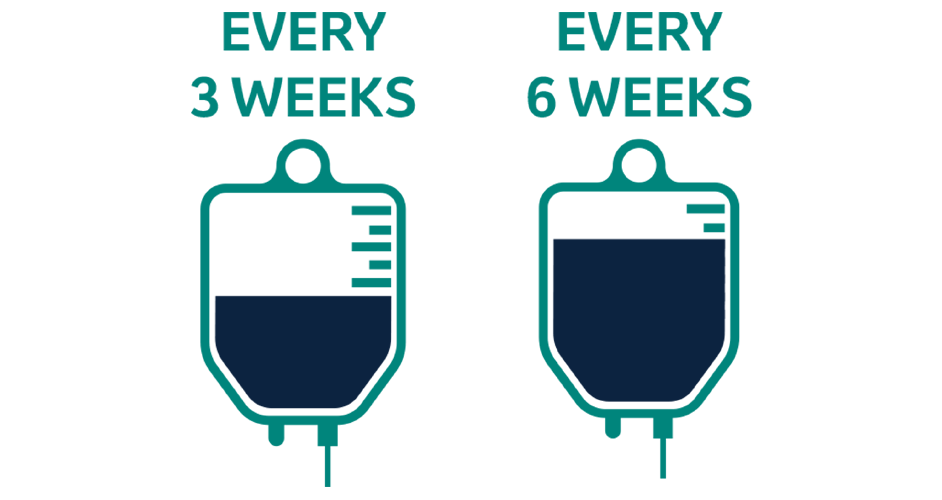
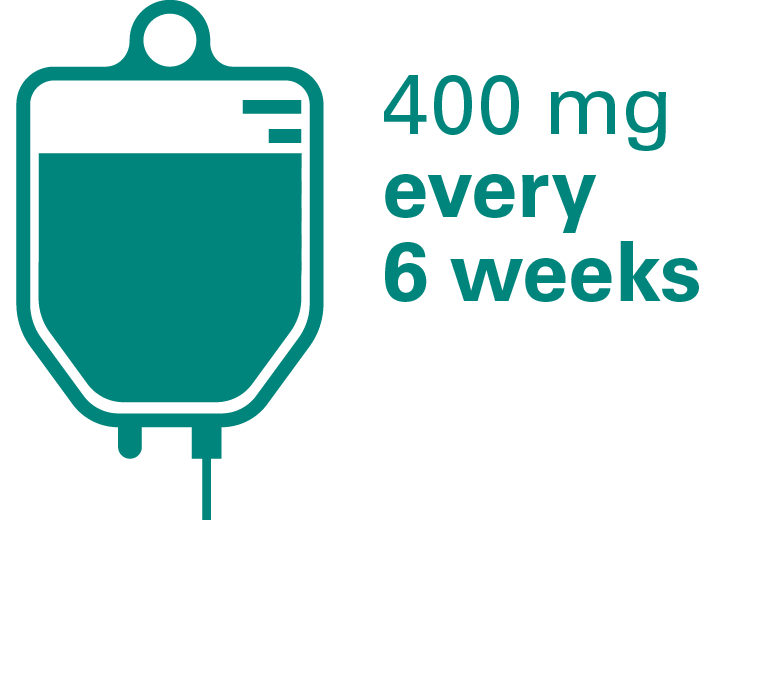
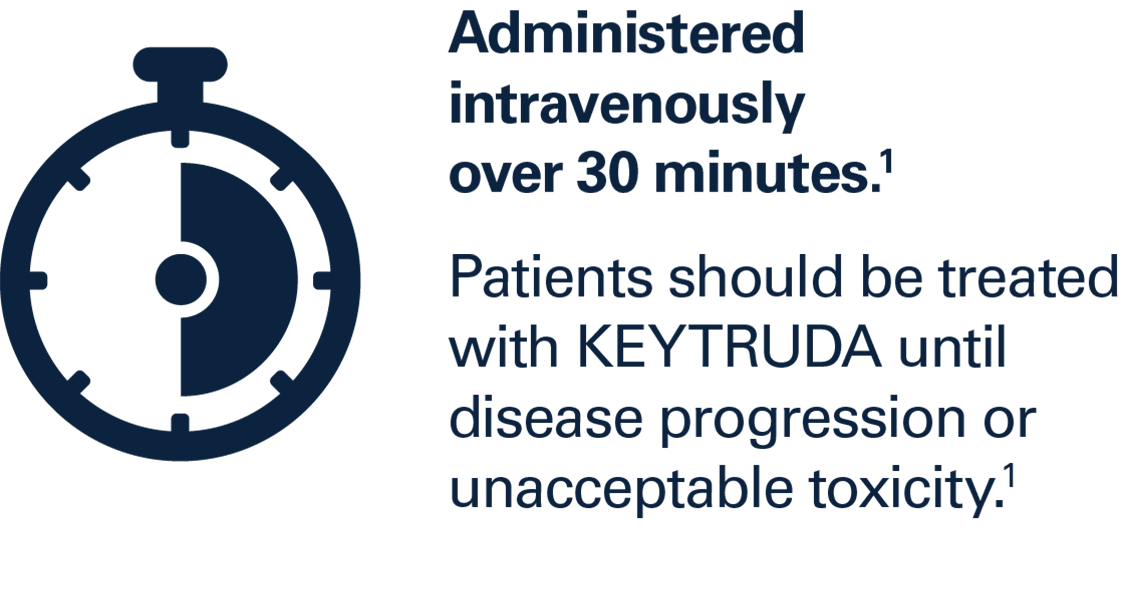
Adults: 200 mg every 3 weeks or 400 mg every 6 weeks. Paediatrics (see Indications): 2 mg/kg (up to 200 mg) every 3 weeks. Administered as an intravenous infusion over 30 minutes.
Atypical responses (i.e. an initial transient increase in tumour size or small new lesions followed by shrinkage) have been observed. Clinically stable patients (i.e. asymptomatic and not requiring urgent intervention) with initial evidence of progression can remain on treatment until confirmed.
For the neoadjuvant and adjuvant treatment of resectable locally advanced HNSCC, treat with neoadjuvant KEYTRUDA for 2 doses of 200 mg every 3 weeks or 1 dose of 400 mg every 6 weeks or until disease progression that precludes definitive surgery or unacceptable toxicity, continued as adjuvant treatment in combination with RT with or without cisplatin for 3 doses of 200 mg every 3 weeks or 2 doses of 400 mg every 6 weeks followed by 12 doses of 200 mg every 3 weeks or 6 doses of 400 mg every 6 weeks as monotherapy or until disease recurrence or unacceptable toxicity.
For the neoadjuvant and adjuvant treatment of high-risk early-stage TNBC, patients should be treated with neoadjuvant KEYTRUDA in combination with chemotherapy for 8 doses of 200 mg every 3 weeks or 4 doses of 400 mg every 6 weeks or until disease progression that precludes definitive surgery or unacceptable toxicity, followed by adjuvant treatment with KEYTRUDA as monotherapy for 9 doses of 200 mg every 3 weeks or 5 doses of 400 mg every 6 weeks or until disease recurrence or unacceptable toxicity. Patients who experience disease progression that precludes definitive surgery or unacceptable toxicity related to KEYTRUDA as neoadjuvant treatment in combination with chemotherapy should not receive KEYTRUDA monotherapy as adjuvant treatment.
Subcutaneous Pembrolizumab:
Adults and Paediatrics 12 years and older and who weigh greater than 40 kg (see Indications): 395 mg every 3 weeks or 790 mg every 6 weeks. Administered as a subcutaneous injection into the thigh or abdomen over 1 minute (395 mg/2.4 mL) or 2 minutes (790 mg/4.8 mL). Do not administer KEYTRUDA SC intravenously.
Atypical responses (i.e. an initial transient increase in tumour size or small new lesions followed by shrinkage) have been observed. For the neoadjuvant and adjuvant treatment of high-risk early-stage TNBC, patients should be treated with neoadjuvant KEYTRUDA SC in combination with chemotherapy for 8 doses of 395 mg every 3 weeks or 4 doses of 790 mg every 6 weeks or until disease progression that precludes definitive surgery or unacceptable toxicity, followed by adjuvant treatment with KEYTRUDA SC as monotherapy for 9 doses of 395 mg every 3 weeks or 5 doses of 790 mg every 6 weeks or until disease recurrence or unacceptable toxicity. Patients who experience disease progression that precludes definitive surgery or unacceptable toxicity related to KEYTRUDA SC as neoadjuvant treatment in combination with chemotherapy should not receive KEYTRUDA SC monotherapy as adjuvant treatment.
For the neoadjuvant and adjuvant treatment of resectable locally advanced HNSCC, treat with neoadjuvant KEYTRUDA SC for 2 doses of 395 mg every 3 weeks or 1 dose of 790 mg every 6 weeks or until disease progression that precludes definitive surgery or unacceptable toxicity, continued as adjuvant treatment in combination with RT with or without cisplatin for 3 doses of 395 mg every 3 weeks or 2 doses of 790 mg every 6 weeks followed by 12 doses of 395 mg every 3 weeks or 6 doses of 790 mg every 6 weeks as monotherapy or until disease recurrence or unacceptable toxicity. See Data Sheet for further information.
Dosing in both Intravenous and Subcutaneous Pembrolizumab:
Please review the Data Sheets for KEYTRUDA/KEYTRUDA SC and the relevant concomitant therapies when used in combination.
KEYTRUDA should be administered first when given in combination with intravenous chemotherapy. Treat with KEYTRUDA SC/KEYTRUDA until disease progression or unacceptable toxicity. For the adjuvant treatment of melanoma, NSCLC, or RCC, KEYTRUDA SC/KEYTRUDA should be administered for up to one year or until disease recurrence or unacceptable toxicity. For the neoadjuvant and adjuvant treatment of resectable NSCLC, patients should be treated with neoadjuvant KEYTRUDA SC in combination with chemotherapy for 12 weeks or until disease progression that precludes definitive surgery or unacceptable toxicity, followed by adjuvant treatment with KEYTRUDA SC as monotherapy for 39 weeks or until disease recurrence or unacceptable toxicity.(v1.0)
KEYTRUDA IV is funded for the treatment of eligible patients with: Stage IIIB-D melanoma, advanced melanoma, advanced MSI-H or dMMR colorectal cancer, relapsed or refractory cHL, previously treated advanced urothelial carcinoma. KEYTRUDA IV is funded for the first-line treatment of eligible patients with the following advanced cancers: NSCLC, HNSCC, and TNBC. Further restrictions apply, see pharmac.govt.nz.3 KEYTRUDA IV is unfunded for all other indications - a charge will apply.
KEYTRUDA SC is not funded for any indication – a charge will apply.
References:
-
KEYTRUDA Data Sheet.
-
KEYTRUDA SC Data Sheet.
-
PHARMAC. Pharmaceutical Schedule. Available at: https://schedule.pharmac.govt.nz/ScheduleOnline.php?edition=&osq=pembrolizumab Accessed 17 July 2025.
NZ-KEY-00834v22.0 TAPS DA 2515PC. Last updated August 2026.